A reflection of time spent in the ancient woodlands in the North and West of Scotland. Fragmented and challenged, soon, there may be only photographs.
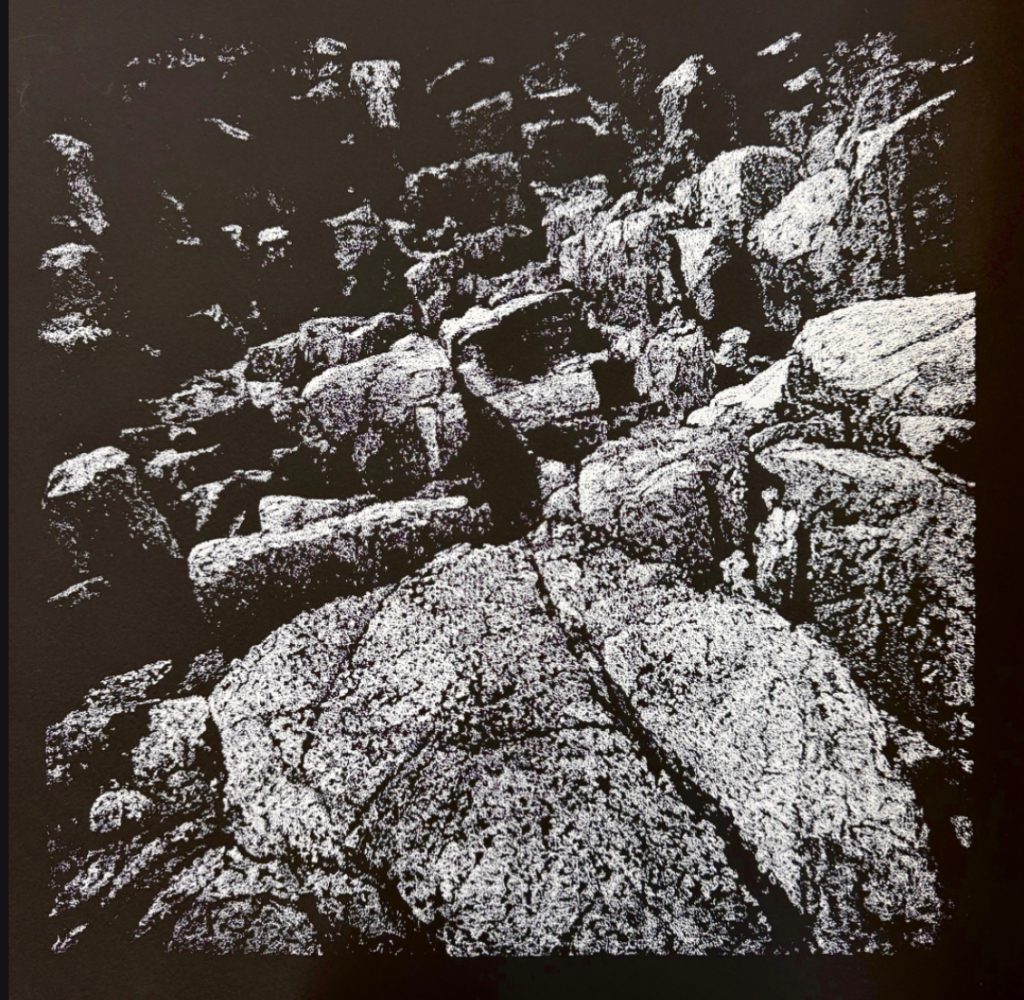
This photographic exhibition is a reflection of time spent in the ancient woodlands in the North and in the West of Scotland during the Winter, Spring, and early Summer of 2025.
In recent years, the Atlantic Oak Forests, which run from the north of Scotland down its west coast, and through England and Wales, have become known as the Scottish Temperate Rainforests. They are pockets of wet and warm woodland, whose climatic conditions allow for rich biodiversity and abundance of highly specialised species of lichens, liverworts and ferns.
‘Ghost Woods’, is also a recent term coined in Scotland to describe an ancient wood with less than 20% of its canopy remaining, reducing the chance of natural regrowth in the face of predation by deer and sheep. They are some of Scotland’s most at risk ancient woodlands.
My project did not set out to develop an ecological argument for the restoration and maintenance of these woods. I simply wished to experience them and to photograph them in that moment. However, as I was working in the hottest, driest Spring and Summer in 60 years, with climate change high in the news agenda, it became inevitable that as I explored and experienced these fragile and isolated fragments of ancient woodland, that I reflected upon their predicament.
The concept of a ‘fragment’ crystallised as I was preparing my prints between field trips. My imagined woodland looked nothing at all like the photographs I had made of the dry and brittle areas I had visited. Supposed wetlands, were crunchy and dry underfoot. My photographs reflected instead a bone-dry environment at risk from wildfires, with little sign of the wet, verdant, moss and lichen dripping tree branches of the Forestry Commission websites and textbooks. As I walked in the woods, I was surprised at how small a space they occupied in the landscape and how fragmented they really were. I also reflected on the nature of the photograph as a ‘fragment’ of a scene, both in time, and in essence.
I found that I was capturing a fragment of a fragment.
I was left with the feeling that at some point soon, there may be only photographs.
The exhibition is supported by a VACMA from Highlife Highland, and a grant from Wasps.
Matt Sillars taught photography at Inverness College UHI for over 25 years, developing photography as part of the Art and Design Curriculum. He developed the stand-alone Higher photography curriculum at Inverness and helped establish the UHI Fine Art Degree, He has taught practical photography at all levels and specialises in darkroom printing and processing, with a special interest in alternative process such as lith printing, cyanotype and anthotypes. He taught photography theory modules on the Culture and Heritage degree for 20 years, focusing on the role of the still image historically in the development of cultural identity.
He jointly manages, on a voluntary basis, the Inverness Community Darkroom, a charity based in the WASPS Inverness Creative Academy, where he teaches and runs workshops. Matt chaired FLOW Photofest, the biennial International Photography Festival held across the Highlands and Islands and Moray, for six years. He was also a board member of the Scottish Society for the History of Photography, and for 20 years he organised the quarterly portfolio sessions for Scottish Photographers, a group focused on the development of independent photography in Scotland. Matt continues to exhibit his own work widely and was shortlisted for the Scottish Portrait Awards in 2020.
Exhibition
Event Details
Date: October 15 2025 - December 8 2025
Time: Mon-Fri, 9am-5pm
Address:
South Block
South Block
60-64 Osborne Street
Glasgow
G1 5QH