At Wasps, we see every day that creative workspace is essential infrastructure and that Scotland needs the imagination of its artists.
Over the past few months, we have spent more time in the rooms where policy is shaped, in the UK and Scottish Parliament, at cross-party meetings, and alongside sector partners.
Creative space is not a “nice to have.” It supports professional creative economies, wellbeing, jobs, skills, and communities across cities, towns, and rural areas. Yet rising property prices, a planning system with little long-term protection, and the practical costs of insurance and health and safety compliance make it increasingly hard to provide secure, affordable space – especially when creative work is often undervalued financially.
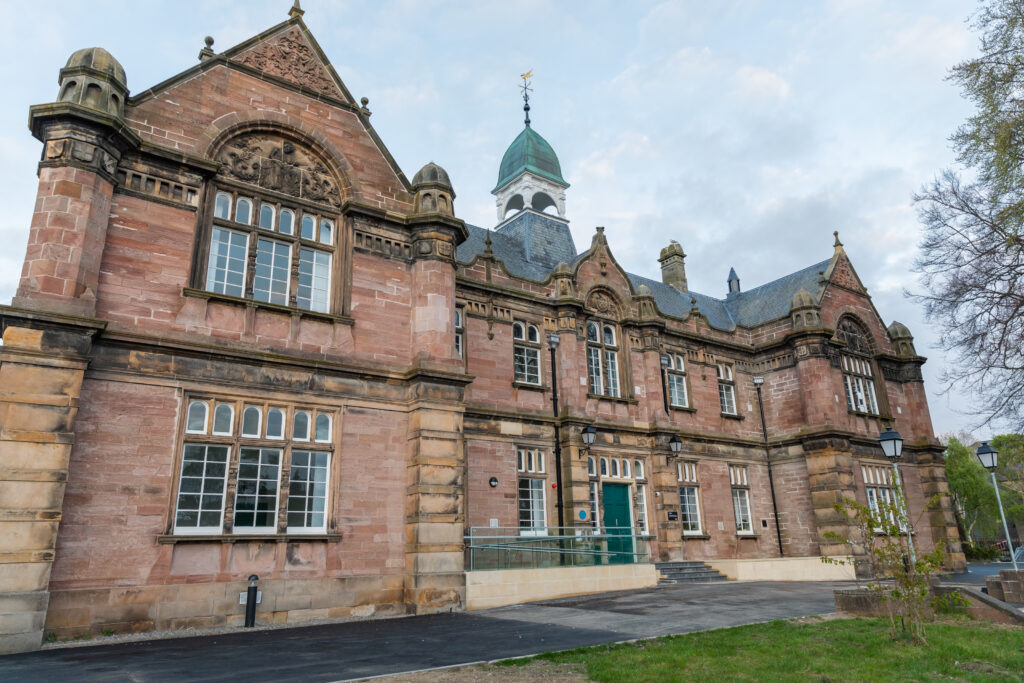
As a Creative Land Trust, we hold 18 buildings across Scotland – from Orkney and Skye to Glasgow, Edinburgh, and Dundee – around five football pitches’ worth of workspace in total. But it’s not just about buildings: our goal is to make these spaces truly work for artists and communities, enabling creativity, collaboration, and cultural production to flourish.
We prioritise:
- Long-term stewardship of buildings and land
- Safe, secure, and well-managed creative workspace for professionals
- Affordable spaces that support access to sustainable creative practice
- Reinvestment back into buildings and communities
- Delivering measurable cultural, social, and economic value
This is a shift in direction: not just holding space, but making it work for creatives. And while we lead the way, Scotland’s policy landscape also needs to evolve to protect and grow the spaces our cultural future depends on.Over the past few months, Wasps’ leadership has spent an increasing amount of time in the rooms where policy is shaped – in Parliament, at cross-party meetings and alongside sector partners, making the case for something we observe every day: that creative workspace is essential infrastructure and Scotland needs artists’ imaginations.
But our aims are only part of the work. The policy environment around us also need to evolve.
Taking the Conversation to Westminster
On 3 March 2026, we contributed to the All-Party Parliamentary Group for Visual Art and Artists, following discussions with Contemporary Visual Arts Network, Design and Artists’ Copyright Society, and Acme Studios.
The focus was practical: how to protect and scale long-term affordable studios, and how planning, tax, benefits and rates policies can support artists and prevent further loss.
We highlighted:
- – How “meanwhile” space use masks data on the amount of secure tenancies
- – Charities and heritage buildings do not have the same VAT exemptions as commercial businesses
- – Charitable business rates relief is inconsistent
- – Section 75 planning rules and land transfers for community use could be utilised more
- – Capital funding is inconsistent
- – Artists and freelancers with fluctuating incomes seek benefits reform
- – The clear economic and social value that our facilities deliver
Engaging at Holyrood
On 27 February 2026, we participated in the “Local People Leading” delegation at the Scottish Parliament, hosted by Scottish Contemporary Art Network.
We advocated for:
- – Inclusive and Democratic Business Models
- – Section 75 use to secure creative workspace alongside affordable housing
These were practical steps that would allow creative infrastructure to become permanent, not temporary.
A Basic Income for Artists
We also engaged in the growing conversation around income security for artists.
We are joining a sector-wide initiative that invites artists and creatives to hold Conversations about a Basic Income for Artists, supported by a Toolkit with practical guidance, templates and a peer network. These discussions will gather evidence to inform future policy proposals in Scotland.
International learning is important here. In Ireland, a targeted Basic Income for Artists pilot provided 2,000 artists with €325 per week for 2.5 years. The scheme showed strong returns and was subsequently made permanent.
Financial insecurity remains a major barrier to creative practice. Affordable space matters, but so does stable income.
Working Collectively
Our engagement and advocacy for the sector sits within a wider effort led by Culture Counts, alongside partners across the sector, including work towards a proposed Culture Act for Scotland.
If creative infrastructure is to be taken seriously, it needs to be reflected in law, planning and investment.
How You Can Get Involved
During this period, you can:
- – Let the Wasps team know if you would like to participate in a Basic Income for Artists Workshop in your building
- – Complete this survey on the future of the Cross-Party Group on Culture and Communities
- – Write to MSPs or local candidates asking them to support a Culture Act for Scotland
Wasps will continue to advocate for long-term, affordable creative space, because without it, cultural life is fragile. With it, creative communities thrive.